

Introduction to Airtable Case Study
The Airtable case study is one of the most impressive examples of how a modern SaaS company transformed traditional spreadsheet management into a powerful cloud-based collaboration platform. Airtable successfully combined the simplicity of spreadsheets with the functionality of databases, creating a unique product that became extremely popular among startups, enterprises, marketers, project managers, and creative teams worldwide. In 2026, Airtable continues to dominate the work management and no-code collaboration industry, making the Airtable case study highly valuable for entrepreneurs, SaaS founders, and business professionals.
The rapid success highlighted in this Airtable case study is closely connected to the company’s innovative Airtable marketing strategy, scalable Airtable business model, and profitable Airtable revenue model. These three pillars helped Airtable compete against traditional spreadsheet software, project management tools, and database platforms such as Microsoft Excel, Google Sheets, Notion, Asana, Monday.com, and Smartsheet.
The growing demand for flexible collaboration tools and no-code workflow management created a huge opportunity for Airtable. Businesses wanted platforms that could organize data visually while remaining easy to use. Airtable captured this opportunity through a customer-focused Airtable marketing strategy that emphasized productivity, collaboration, and workflow customization.

In this detailed Airtable case study, we will explore:
- Airtable company history
- Founder journey
- Product evolution
- Airtable marketing strategy
- Airtable business model
- Airtable revenue model
- Competitive analysis
- SaaS growth lessons
- Challenges and future opportunities
- Predictions for Airtable in 2026
The global rise of digital collaboration tools has also strengthened the Airtable business model, while recurring SaaS subscriptions under the Airtable revenue model created long-term financial scalability.
What is Airtable?
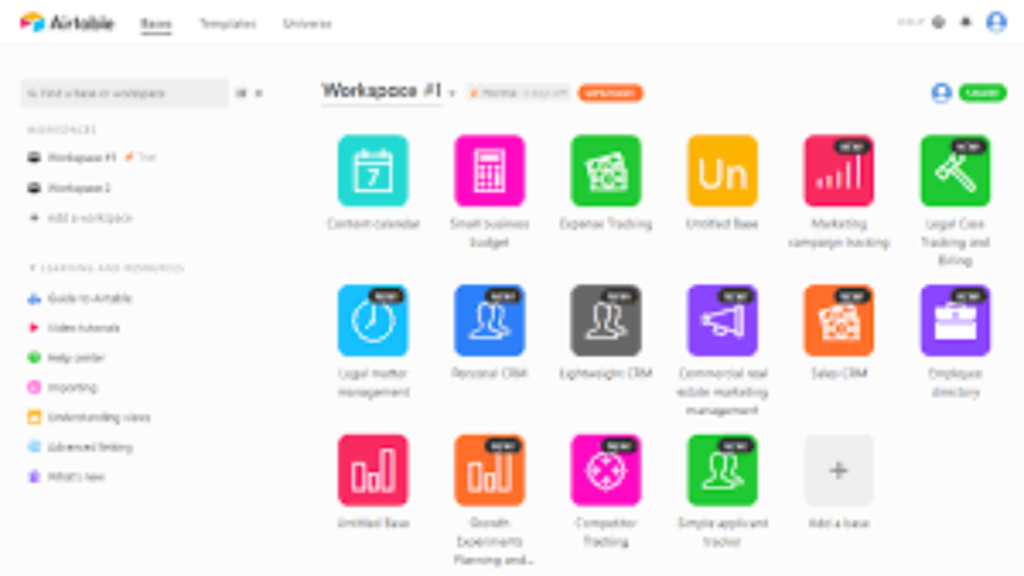
Airtable is a cloud-based collaboration and database platform that combines spreadsheet simplicity with database functionality. Unlike traditional spreadsheets, Airtable allows users to create customizable workflows, automate tasks, organize structured data, and collaborate with teams in real time.
Users can build:
- Project management systems
- CRM tools
- Content calendars
- Marketing workflows
- Inventory systems
- Editorial pipelines
- Business dashboards
The innovation shown in this Airtable case study simplified work management for businesses of all sizes.
Airtable became highly popular among:
- Startups
- Enterprises
- Marketing teams
- Agencies
- Creators
- HR departments
- Product managers
This diverse customer base significantly strengthened the scalability of the Airtable business model.
Founders Behind the Airtable Case Study
Airtable was founded by Howie Liu, Andrew Ofstad, and Emmett Nicholas. The founders believed that software should be flexible enough for any team while remaining simple for non-technical users.
Traditional databases were often:
- Complex
- Technical
- Difficult to customize
- Hard to collaborate on
The founders wanted to create a platform that offered database power with spreadsheet simplicity.
This vision became the foundation of the successful Airtable business model.
The founders focused heavily on flexibility, collaboration, and workflow customization. This customer-centric philosophy later became one of the strongest pillars of the Airtable marketing strategy.
History and Growth of Airtable
Early Stage of Airtable
Airtable launched during the rise of cloud-based SaaS collaboration tools. Initially, the company focused on helping teams organize information more efficiently than traditional spreadsheets.
At first, the market viewed Airtable as a spreadsheet alternative. However, the company gradually evolved into a complete work management and no-code workflow platform.
This transition is one of the most important highlights of the Airtable case study.
Product Expansion
Airtable introduced advanced capabilities such as:
- Workflow automation
- API integrations
- Team collaboration
- Dashboard creation
- App integrations
- AI-powered features
- No-code application building
These innovations strengthened the Airtable business model significantly.
Rapid Growth in 2025 and 2026
By 2026, Airtable became one of the most widely used collaborative work platforms globally.
Major growth drivers included:
- Remote work adoption
- No-code software demand
- Team collaboration trends
- Workflow automation
- SaaS industry growth
- Enterprise digital transformation
Each of these factors contributed directly to the success of the Airtable marketing strategy.
Airtable Business Model Explained

The Airtable business model is primarily based on SaaS subscriptions and enterprise collaboration services.
Key Components of Airtable Business Model
1. Subscription Plans
Airtable offers multiple subscription tiers for:
- Individuals
- Teams
- Small businesses
- Agencies
- Enterprises
Recurring subscriptions form the foundation of the Airtable revenue model.
2. Enterprise Solutions
Large organizations purchase enterprise plans with advanced features including:
- Security
- Permissions
- Automation
- Dedicated support
- Admin controls
Enterprise contracts significantly improve the profitability of the Airtable revenue model.
3. Workflow Automation
Airtable provides workflow automation capabilities that help businesses improve efficiency.
This feature increases customer retention under the Airtable business model.
4. API and Integrations
The platform integrates with many external tools and applications.
This ecosystem approach strengthens the scalability of the Airtable business model.
5. AI and Collaboration Features
AI-powered workflows and collaborative tools create additional value for customers.
Airtable Revenue Model Analysis
The Airtable revenue model is recurring, scalable, and subscription-driven.
This predictable income structure is one of the major reasons investors value Airtable highly.
Main Revenue Sources
Subscription Revenue
Monthly and annual subscription plans generate recurring income.
This recurring structure forms the core of the Airtable revenue model.
Enterprise Revenue
Enterprise customers pay premium pricing for advanced capabilities and scalability.
Enterprise adoption significantly strengthens the Airtable revenue model.
Automation and Add-On Revenue
Advanced workflow automation and integrations contribute additional revenue streams.
API and Infrastructure Services
Businesses using Airtable extensively often pay for additional functionality and operational scalability.
Marketplace Ecosystem
Templates, extensions, and integrations create ecosystem-driven monetization opportunities.
This ecosystem expansion supports the long-term scalability of the Airtable business model.
Airtable Marketing Strategy Explained

The Airtable marketing strategy is one of the biggest reasons behind the company’s rapid growth.
Instead of relying only on traditional advertising, Airtable focused heavily on product education, community-driven adoption, and workflow flexibility.
1. Product-Led Growth
Airtable allows users to start for free before upgrading to paid plans.
This freemium approach accelerated user adoption globally.
The freemium model became a major strength of the Airtable marketing strategy.
2. Content Marketing
Content marketing plays a major role in the Airtable marketing strategy.
The company produces:
- Tutorials
- Workflow guides
- Productivity resources
- Use-case examples
- Video walkthroughs
- Customer stories
Educational content helps businesses understand the platform’s flexibility.
3. SEO Strategy
SEO is another important component of the Airtable marketing strategy.
The company ranks for keywords related to:
- Project management
- Workflow automation
- Collaboration software
- No-code tools
- Productivity systems
Organic traffic became a major customer acquisition channel.
4. Community Building
Airtable built a strong user community where people share:
- Templates
- Productivity systems
- Automation workflows
- Business use cases
Community engagement improved brand loyalty and retention.
5. Enterprise Positioning
Airtable successfully positioned itself as both startup-friendly and enterprise-ready.
This dual positioning strengthened the effectiveness of the Airtable marketing strategy.
Why Airtable Became Successful

The Airtable case study highlights several major success factors.
Simplicity with Power
Airtable combined spreadsheet simplicity with database functionality.
Workflow Flexibility
Businesses could customize workflows according to their needs.
Collaboration Focus
The platform improved team collaboration significantly.
Product Innovation
Continuous innovation kept Airtable competitive.
Recurring SaaS Revenue
The subscription-focused Airtable revenue model created predictable long-term income.
Competitor Analysis in Airtable Case Study
Airtable competes with several major software platforms.
Microsoft Excel
Excel dominates traditional spreadsheet management.
Google Sheets
Google Sheets offers collaborative spreadsheet functionality.
Notion
Notion combines productivity, notes, and collaboration.
Monday.com
Monday.com focuses on work management and team collaboration.
Asana
Asana specializes in project management workflows.
Despite strong competition, the Airtable marketing strategy helped Airtable create a unique market position focused on flexibility and no-code collaboration.
Airtable and the No-Code Industry
The no-code industry continues growing rapidly worldwide.
This growth strongly supports the expansion discussed in the Airtable case study.
Businesses increasingly prefer no-code systems because they offer:
- Faster implementation
- Lower operational costs
- Improved flexibility
- Better workflow customization
The rise of no-code technology directly strengthens both the Airtable business model and the Airtable revenue model.
Challenges in Airtable Case Study
Although highly successful, Airtable still faces challenges.
Rising Competition
The productivity software industry is extremely competitive.
Enterprise Scalability
Large organizations require advanced security and infrastructure.
Feature Complexity
As Airtable adds more functionality, maintaining simplicity becomes difficult.
Market Differentiation
The company must continue differentiating itself from competitors.
Despite these challenges, the Airtable case study remains one of the strongest examples of SaaS platform growth.
Future of Airtable in 2026
The future of Airtable looks highly promising.
AI-Powered Automation
AI integration may improve workflow automation significantly.
Enterprise Expansion
More enterprises are adopting flexible collaboration platforms.
Global Growth
International adoption continues increasing rapidly.
Marketplace Expansion
The Airtable ecosystem may expand through templates, automations, and integrations.
These opportunities can significantly improve the Airtable revenue model in the coming years.
Financial Strength of Airtable
Airtable continues attracting strong investor attention because of:
- High recurring revenue
- Growing enterprise adoption
- Expanding SaaS industry
- Strong customer retention
- Workflow automation demand
The recurring nature of the Airtable revenue model provides financial stability for long-term expansion.
SEO Lessons from Airtable Marketing Strategy
The Airtable marketing strategy offers valuable lessons for SaaS startups and marketers.
Educational Content Builds Authority
Tutorials and productivity resources attract organic traffic.
Product-Led Growth Accelerates Adoption
Freemium access reduces customer entry barriers.
Communities Improve Retention
Strong user communities create loyalty and referrals.
SEO Reduces Advertising Dependency
Organic search traffic improves profitability.
These lessons make the Airtable case study highly valuable for entrepreneurs and SaaS businesses.
Airtable Business Model for Startups
Many startups study the Airtable business model because it demonstrates how SaaS companies can scale globally using workflow automation and subscription-based monetization.
Airtable successfully combined:
- SaaS subscriptions
- Workflow automation
- Enterprise services
- Collaboration systems
- Marketplace ecosystems
This combination created a highly scalable business ecosystem.
Conclusion of Airtable Case Study
The Airtable case study is a remarkable example of how a SaaS platform transformed collaboration and workflow management globally. Airtable successfully combined spreadsheet simplicity with database flexibility, creating a platform used by startups, enterprises, and creative teams worldwide.
The company’s rapid growth is closely connected to:
- Effective Airtable marketing strategy
- Scalable Airtable business model
- Predictable Airtable revenue model
As workflow automation and no-code collaboration continue expanding globally, Airtable is expected to remain one of the leading SaaS platforms in productivity and work management.
The Airtable case study proves that companies focusing on flexibility, collaboration, recurring revenue, and product-led growth can achieve massive long-term success in the SaaS industry.
FAQs About Airtable Case Study
1. What is Airtable case study?
The Airtable case study explains how Airtable became one of the leading no-code collaboration and workflow management platforms globally through SaaS innovation and product-led growth.
2. What is Airtable marketing strategy?
The Airtable marketing strategy focuses on content marketing, SEO optimization, workflow education, freemium acquisition, and community engagement.
3. What is Airtable revenue model?
The Airtable revenue model generates income through subscriptions, enterprise solutions, workflow automation features, and collaboration-based SaaS services.
4. What is Airtable business model?
The Airtable business model operates as a SaaS platform where users pay for collaboration tools, workflow systems, automation, and enterprise-level productivity features.
5. Why is Airtable successful?
The success highlighted in the Airtable case study comes from flexibility, workflow customization, strong collaboration tools, and recurring SaaS monetization.
6. How does Airtable make money?
Airtable earns revenue through premium subscriptions, enterprise services, workflow automation, integrations, and scalability features under the Airtable revenue model.
7. Why is Airtable marketing strategy effective?
The Airtable marketing strategy is effective because it combines educational resources, SEO growth, product-led adoption, and strong workflow-focused branding.
8. What can startups learn from Airtable case study?
Startups can learn about SaaS scalability, workflow automation, recurring subscriptions, product-led growth, and community-driven expansion from the Airtable case study.