

Introduction to Ramp Case Study 2026
The Ramp has become one of the fastest-growing fintech companies in the modern startup ecosystem. This Ramp case study explains how Ramp transformed corporate expense management and financial automation using AI-powered software, smart corporate cards, and operational efficiency tools. In recent years, businesses across the world have started replacing traditional banking and manual finance workflows with digital financial platforms. Ramp identified this opportunity early and built a scalable fintech infrastructure that helps businesses reduce costs, automate operations, and improve spending visibility.
This detailed Ramp case study explores the Ramp marketing strategy, Ramp revenue model, and Ramp business model that enabled the company to scale rapidly in a highly competitive fintech market. From startup-focused expense management to enterprise financial automation, Ramp has created a strong ecosystem combining SaaS software, fintech infrastructure, AI automation, and business intelligence tools. The Ramp case study also demonstrates how modern startups can use automation, customer-centric innovation, and recurring revenue models to disrupt traditional industries.

The Ramp business model is especially interesting because it combines multiple revenue streams while solving operational inefficiencies for businesses. Meanwhile, the Ramp marketing strategy focuses heavily on cost optimization, financial productivity, educational content, and customer trust. The Ramp revenue model generates recurring income through interchange fees, SaaS subscriptions, financial services, and payment infrastructure solutions. Together, these factors have made Ramp one of the most valuable fintech startups globally.
Company Overview in Ramp Case Study
Ramp was founded in 2019 by Eric Glyman and Karim Atiyeh. The founders realized that traditional business finance systems were inefficient, outdated, and heavily dependent on manual workflows. Companies often struggled with delayed reimbursements, poor spending visibility, manual accounting processes, and inefficient procurement systems. Businesses needed a platform that could automate expense management while helping companies reduce unnecessary spending.
The Ramp case study highlights how the company solved these problems through a technology-first approach. Ramp introduced corporate cards integrated with AI-powered financial software that automatically categorized expenses, tracked receipts, generated reports, and provided intelligent spending insights. This combination of fintech and SaaS automation became the foundation of the Ramp business model.
Today, Ramp offers:
- Corporate cards
- Expense management software
- Procurement systems
- Vendor payment tools
- Financial analytics
- AI-powered automation
- Accounting integrations
- Budget management systems
The Ramp marketing strategy strongly promotes efficiency, automation, and operational savings instead of traditional banking features. This approach differentiates Ramp from legacy financial institutions. Meanwhile, the Ramp revenue model continues growing because businesses increasingly depend on automation-driven financial operations.
Evolution of Ramp Business Model in Ramp Case Study
The Ramp case study becomes more interesting when we analyze how the company evolved within a short period. Initially, Ramp mainly focused on corporate cards and expense management tools for startups. However, the company quickly realized that businesses wanted a complete financial operating system rather than just payment cards.
As a result, the Ramp business model expanded into:
- AI-powered expense tracking
- Procurement automation
- Vendor payment management
- Financial reporting systems
- Budget optimization tools
- Enterprise workflow automation
- SaaS integrations
The Ramp business model continuously evolved according to customer needs. Instead of simply processing transactions, Ramp started helping businesses improve operational efficiency and reduce financial waste. This shift significantly strengthened the Ramp revenue model because customers became more dependent on the platform for daily operations.
At the same time, the Ramp marketing strategy evolved into an educational and value-driven approach. Ramp started publishing financial productivity guides, SaaS spending reports, automation resources, and startup finance insights. This content marketing strategy generated strong organic traffic and established the company as a fintech authority.
The Ramp case study clearly demonstrates how fintech startups can scale rapidly by continuously innovating and solving operational pain points.
Ramp Business Model Explained
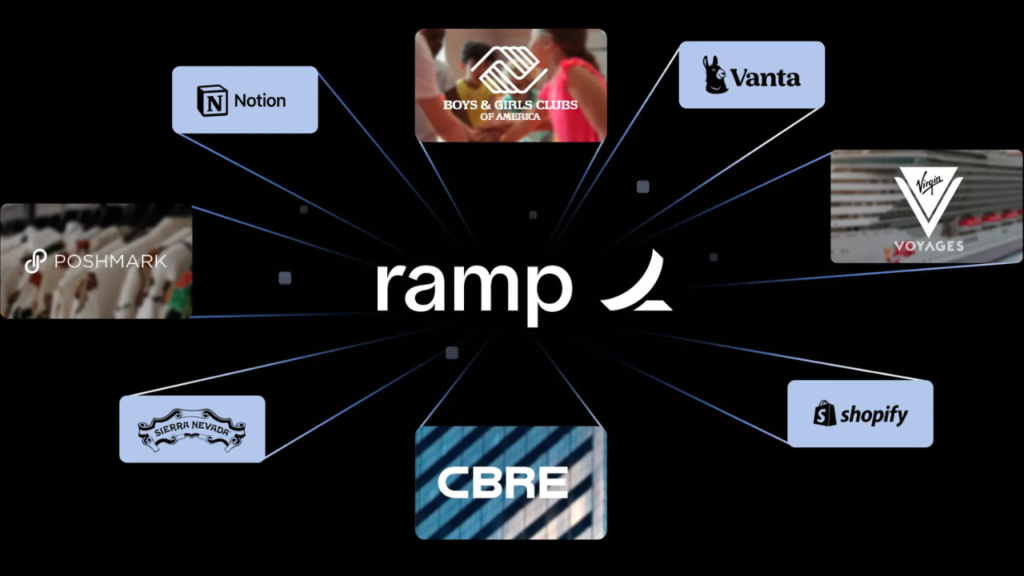
The Ramp business model is based on fintech infrastructure, SaaS automation, and AI-driven financial management. Unlike traditional financial companies that focus only on banking services, Ramp combines software and finance into one ecosystem.
One of the core components of the Ramp business model is corporate cards. Businesses use Ramp cards for employee expenses, software subscriptions, travel costs, and vendor payments. Whenever transactions occur, Ramp earns interchange fees that contribute directly to the Ramp revenue model.
Another major component of the Ramp business model is expense management automation. Ramp automatically collects receipts, categorizes transactions, tracks spending, and generates reports. This automation saves time for finance teams while improving accuracy.
The Ramp business model also includes procurement and vendor management tools. Companies can automate approval workflows, manage vendor relationships, and optimize purchasing decisions. These features increase customer dependency on the platform and strengthen long-term retention.
SaaS integrations are another important part of the Ramp business model. Ramp integrates with:
- Accounting software
- ERP platforms
- HR systems
- Payroll tools
- Tax management software
These integrations improve operational efficiency and create switching costs for customers, making the Ramp business model highly scalable.
The Ramp case study demonstrates how combining fintech services with SaaS automation creates recurring revenue opportunities and long-term customer loyalty.
Ramp Revenue Model Explained
The Ramp revenue model is one of the strongest examples of modern fintech monetization. The company generates income through multiple recurring and scalable revenue streams.
The primary component of the Ramp revenue model is interchange fees. Whenever businesses use Ramp corporate cards, the company earns a percentage of transaction value from payment processors and merchants. Since business spending volumes are extremely high, interchange revenue contributes significantly to overall profitability.
Another important part of the Ramp revenue model is SaaS subscription revenue. Businesses pay for premium financial automation tools, procurement management systems, AI-powered analytics, advanced reporting dashboards, and workflow automation features. These subscriptions create predictable recurring income.
The Ramp revenue model also includes vendor payment services and procurement automation. Ramp helps businesses automate invoice processing, vendor payments, and accounts payable workflows while earning service-related fees.
Partnerships also play an important role in the Ramp revenue model. Ramp collaborates with banks, accounting software providers, ERP companies, and fintech infrastructure platforms. These strategic partnerships increase product adoption and create additional revenue opportunities.
One of the biggest strengths of the Ramp revenue model is diversification. Instead of depending on a single source of income, Ramp combines:
- Transaction revenue
- SaaS subscriptions
- Procurement services
- Financial infrastructure solutions
- Automation tools
This diversified structure makes the Ramp business model highly scalable and sustainable.
Ramp Marketing Strategy in 2026
The Ramp marketing strategy is considered one of the most successful B2B fintech marketing approaches. Unlike traditional banks that focus mainly on financial services, Ramp markets itself as a platform that helps businesses save money and improve operational efficiency.
One major component of the Ramp marketing strategy is educational content marketing. Ramp publishes blogs, guides, SaaS spending reports, automation resources, and financial productivity insights. This content attracts organic traffic while building trust with finance professionals and startups.
SEO is another important part of the Ramp marketing strategy. The company targets keywords related to expense management, procurement automation, business finance, and SaaS optimization. This helps Ramp generate consistent inbound leads.
The Ramp marketing strategy also focuses heavily on product-led growth. Businesses can easily sign up, integrate tools, and automate workflows without complicated onboarding processes. This simplicity improves customer acquisition and user retention.
Performance marketing is another key element of the Ramp marketing strategy. The company uses:
- Google Ads
- LinkedIn campaigns
- Startup-focused advertising
- B2B digital marketing
- Retargeting campaigns
Strategic partnerships also strengthen the Ramp marketing strategy. Ramp collaborates with venture capital firms, startup accelerators, SaaS communities, and accounting platforms. These partnerships improve brand visibility and accelerate customer acquisition.
The Ramp case study highlights how educational marketing and operational value positioning helped the company build a powerful fintech brand.
Why Ramp Became Successful
The Ramp case study reveals several reasons behind the company’s rapid growth and success. One major reason is that Ramp solved real operational problems faced by businesses. Many companies struggled with inefficient expense management, delayed reimbursements, manual accounting processes, and poor financial visibility. Ramp simplified these workflows through automation and AI-powered tools.
Another reason behind the success of the Ramp business model is cost optimization. Ramp helps businesses identify wasteful spending, optimize software subscriptions, and improve procurement efficiency. This cost-saving approach strongly differentiates the company from competitors.
The Ramp marketing strategy also contributed significantly to growth because it focused on customer education instead of traditional banking promotions. Businesses increasingly trusted Ramp because the platform demonstrated measurable operational improvements.

AI-powered automation is another critical factor behind the success of the Ramp business model. Ramp uses artificial intelligence for:
- Expense categorization
- Fraud detection
- Budget forecasting
- Procurement optimization
- Financial reporting
These AI capabilities improve scalability while reducing operational complexity for customers.
The Ramp revenue model also supports rapid growth because recurring SaaS subscriptions and transaction-based revenue create predictable income streams.
Competitive Advantage of Ramp Business Model
The Ramp case study highlights several competitive advantages that differentiate the company from traditional financial institutions and fintech competitors.
One of the biggest advantages of the Ramp business model is automation. Ramp eliminates repetitive financial tasks and reduces operational inefficiencies through AI-powered workflows.
Another major advantage is spending optimization. Ramp analyzes company spending patterns and provides actionable insights that help businesses save money. This operational value strengthens customer loyalty.
The Ramp marketing strategy strongly promotes these savings and productivity benefits, making the platform highly attractive to startups and enterprises.
User-friendly software design is another competitive advantage. Ramp simplifies expense tracking, procurement management, and vendor payments through an intuitive interface.
The Ramp business model also benefits from strong integrations with:
- ERP systems
- Payroll platforms
- Accounting software
- HR management tools
These integrations increase customer dependency and improve long-term retention.
The Ramp case study demonstrates how fintech infrastructure, SaaS automation, AI-powered insights, and operational efficiency create sustainable competitive advantages.
Challenges in Ramp Case Study
Despite rapid growth, the Ramp case study also highlights several challenges faced by the company.
One major challenge is intense competition in the fintech industry. Ramp competes with:
- Brex
- Stripe
- American Express
- Traditional banks
Competition requires continuous innovation and aggressive product development.
Regulatory compliance is another challenge for the Ramp business model. Financial companies must comply with anti-money laundering laws, data protection regulations, and financial reporting standards.
Economic slowdowns also impact the Ramp revenue model because businesses may reduce operational spending during uncertain market conditions.
Cybersecurity risks are another important challenge because fintech platforms handle sensitive business data and transactions.
Despite these obstacles, the Ramp marketing strategy focuses heavily on efficiency and cost savings, helping maintain strong customer demand even during economic downturns.
Ramp and AI in 2026

Artificial intelligence has become a central part of the Ramp case study 2026. AI now powers many aspects of the platform including fraud detection, expense categorization, budgeting optimization, procurement analysis, and financial forecasting.
The Ramp marketing strategy strongly emphasizes AI-powered automation because businesses increasingly prioritize efficiency and operational productivity.
The Ramp business model benefits significantly from AI because automation reduces manual work while improving scalability.
AI also strengthens the Ramp revenue model because companies are willing to pay for advanced financial analytics and intelligent automation tools.
The Ramp case study demonstrates how AI is transforming modern fintech platforms into complete financial operating systems.
Future of Ramp Business Model
The future of Ramp looks highly promising as businesses continue adopting digital finance automation platforms.
The Ramp case study suggests future opportunities in:
- Embedded finance
- Enterprise SaaS expansion
- AI-powered accounting
- Procurement automation
- Global payment infrastructure
- Financial intelligence platforms
The Ramp marketing strategy will likely continue focusing on automation, productivity, and operational savings because these are becoming major priorities for businesses worldwide.
Meanwhile, the Ramp revenue model is expected to grow through recurring SaaS subscriptions, fintech infrastructure services, procurement management, and enterprise financial automation.
The Ramp business model demonstrates how fintech startups can achieve long-term scalability by solving operational inefficiencies and continuously innovating.
Conclusion of Ramp Case Study 2026
This Ramp case study clearly explains how Ramp became one of the fastest-growing fintech companies globally. The Ramp marketing strategy played a major role in building trust through educational content, operational value positioning, partnerships, and product-led growth.
Meanwhile, the Ramp revenue model generated scalable recurring income through interchange fees, SaaS subscriptions, procurement services, and financial infrastructure solutions.
The Ramp business model stands out because of its combination of fintech services, AI-powered automation, SaaS integrations, and operational efficiency tools.
Businesses and entrepreneurs can learn several important lessons from this Ramp case study:
- Solve real operational problems
- Focus on automation and efficiency
- Build recurring revenue streams
- Use educational marketing
- Prioritize customer productivity
As digital finance and artificial intelligence continue evolving, Ramp is expected to remain one of the most influential fintech companies in the world.
FAQs on Ramp Case Study 2026
1. What is the Ramp case study about?
The Ramp case study explains how Ramp became a leading fintech company through expense automation, AI-powered financial tools, and operational efficiency solutions.
2. What is the Ramp marketing strategy?
The Ramp marketing strategy focuses on educational content, cost optimization, SEO, partnerships, and automation-driven branding.
3. How does the Ramp revenue model work?
The Ramp revenue model mainly depends on interchange fees, SaaS subscriptions, procurement tools, and financial infrastructure services.
4. Why is the Ramp business model successful?
The Ramp business model succeeds because of AI automation, SaaS integrations, operational efficiency, and customer-focused financial management.
5. What can startups learn from the case study of Ramp?
The case study of Ramp teaches startups about fintech innovation, automation-driven scalability, recurring revenue, and operational productivity.
6. How does Ramp make money?
The Ramp earning strategy includes transaction fees, software subscriptions, procurement services, and fintech infrastructure solutions.
7. What makes Ramp different from competitors?
The Ramp competitive strategy focuses on automation, cost savings, AI-powered insights, operational efficiency, and user-friendly software.
8. How is AI impacting Ramp in 2026?
AI improves Ramp through fraud detection, automated expense tracking, budgeting optimization, procurement analysis, and financial forecasting.