
Introduction to boAt Case Study 2026
The Indian consumer electronics industry has witnessed extraordinary growth over the last decade. Rapid smartphone adoption, increasing internet penetration, affordable data plans, and a growing youth population have transformed the way consumers interact with technology. Among the many brands that emerged during this period, boAt stands out as one of the most successful Indian consumer electronics companies. This boAt case study explores how the company disrupted the audio accessories market through a powerful boAt business model, an innovative boAt revenue model, and a highly effective boAt marketing strategy.
Founded in 2016, boAt entered a market dominated by global electronics giants. Despite facing intense competition, the company quickly established itself as a market leader in audio wearables and accessories by focusing on affordability, stylish designs, and youth-oriented branding. The remarkable growth highlighted in this boAt case study demonstrates how understanding consumer preferences can create a highly scalable business.
This comprehensive boAt case study examines the company’s history, growth journey, operational structure, financial framework, branding initiatives, challenges, opportunities, and future outlook. Understanding the boAt business model, boAt revenue model, and boAt marketing strategy offers valuable lessons for entrepreneurs, marketers, and business students.

Company Overview
This boAt case study begins with understanding the company itself.
boAt is an Indian lifestyle electronics brand specializing in:
- Wireless earbuds
- Headphones
- Smartwatches
- Bluetooth speakers
- Charging accessories
- Mobile accessories
The company primarily targets young consumers who seek fashionable, affordable, and high-quality technology products.
The success explored in this boAt case study stems from the company’s ability to combine lifestyle branding with consumer electronics innovation.
History and Growth Journey
A critical part of this boAt case study involves examining how the company evolved from a startup into a leading electronics brand.
The founders identified a gap in the Indian market. Many consumers wanted premium-looking audio products but were unwilling to pay the high prices charged by international brands.
The company focused on:
- Affordable pricing
- Stylish designs
- Strong online presence
- Digital-first sales
- Youth-focused branding
These strategic decisions became the foundation of the boAt business model and fueled rapid expansion.
Important milestones include:
- Launch of charging cables and accessories
- Expansion into headphones
- Entry into wireless audio devices
- Smartwatch launches
- Celebrity endorsements
- International expansion initiatives
Each of these milestones strengthened the boAt business model and enhanced market positioning.
boAt Business Model Explained
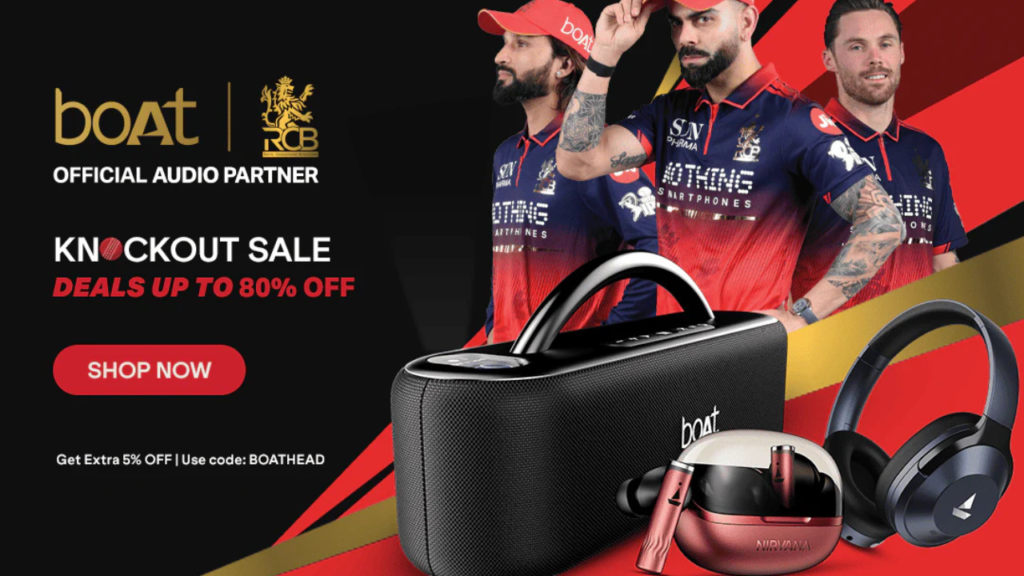
The boAt business model is centered around affordable premium products, direct consumer engagement, and efficient supply chain management.
One of the biggest strengths of the boAt business model is its ability to deliver high perceived value at competitive prices.
Product-Focused Strategy
The foundation of the boAt business model lies in creating products that combine:
- Style
- Functionality
- Affordability
- Durability
The company understands that consumers want products that look premium without premium pricing.
This consumer-centric approach strengthens the boAt business model.
Digital-First Operations
A defining characteristic of the boAt business model is its digital-first approach.
The company initially focused heavily on online channels rather than building expensive retail infrastructure.
Benefits of this approach include:
- Lower operating costs
- Faster scaling
- Wider market reach
- Better customer data
Digital operations remain a major strength of the boAt business model.
Direct-to-Consumer Sales
The boAt business model leverages direct-to-consumer sales through its official platforms.
This strategy provides:
- Higher profit margins
- Customer insights
- Stronger brand control
- Better customer relationships
Direct sales significantly enhance the efficiency of the boAt business model.
Omnichannel Distribution
As the company grew, the boAt business model expanded beyond online sales.
Products became available through:
- Electronics stores
- Retail chains
- Mobile stores
- Online marketplaces
This omnichannel strategy helped strengthen the boAt business model by improving accessibility.
Brand Positioning
A major strength of the boAt business model is its positioning as a lifestyle brand rather than just an electronics company.
The company sells an identity associated with:
- Youth culture
- Music
- Fitness
- Fashion
- Entertainment
This positioning differentiates the boAt business model from traditional electronics brands.
Asset-Light Operations
The boAt business model follows an asset-light approach.
Instead of owning large manufacturing facilities, the company focuses on:
- Product design
- Branding
- Marketing
- Distribution
This strategy improves flexibility and scalability within the boAt business model.
Innovation and Product Expansion
Innovation plays an increasingly important role in the boAt business model.
The company regularly launches new products to address changing consumer preferences.
This continuous innovation helps maintain the competitiveness of the boAt business model.
boAt Revenue Model Analysis

Understanding the boAt revenue model is essential for evaluating the company’s financial performance.
The boAt revenue model relies on multiple product categories and distribution channels to generate sustainable growth.
Audio Product Revenue
Audio devices form the largest component of the boAt revenue model.
Revenue comes from:
- Earbuds
- Headphones
- Neckbands
- Speakers
This segment remains the core pillar of the boAt revenue model.
Smartwatch Revenue
Smartwatches have become a significant contributor to the boAt revenue model.
As wearable technology gains popularity, smartwatch sales continue supporting growth.
This category has strengthened the diversification of the boAt revenue model.
Mobile Accessories Revenue
Accessories contribute additional income to the boAt revenue model.
Products include:
- Charging cables
- Power banks
- Chargers
- Cases
Accessory sales provide a stable revenue stream within the boAt revenue model.
Online Sales Revenue
Online channels remain a major component of the boAt revenue model.
Benefits include:
- Wider customer reach
- Lower costs
- Faster transactions
Online sales continue driving the scalability of the boAt revenue model.
Retail Revenue
Retail stores contribute significantly to the boAt revenue model.
Physical presence improves:
- Brand visibility
- Consumer trust
- Product accessibility
Retail expansion has become increasingly important for the boAt revenue model.
Repeat Purchase Revenue
Customer loyalty strengthens the boAt revenue model.
Satisfied customers frequently purchase multiple products from the brand.
This repeat purchasing behavior improves long-term profitability within the boAt revenue model.
Partnership Revenue
Strategic collaborations support the boAt revenue model through increased visibility and distribution opportunities.
Partnerships with retailers and e-commerce platforms help accelerate growth.
Future Growth Drivers
Several trends are expected to strengthen the boAt revenue model:
- Wearable technology growth
- Smart device adoption
- International expansion
- Product diversification
- Premium product segments
These opportunities are likely to shape the future of the boAt revenue model.
boAt Marketing Strategy Analysis
The remarkable success highlighted in this boAt case study is closely linked to the company’s innovative boAt marketing strategy.
The boAt marketing strategy focuses on youth culture, digital engagement, influencer partnerships, and lifestyle branding.
Youth-Centric Branding
One of the strongest elements of the boAt marketing strategy is its focus on young consumers.
The brand positions itself around:
- Music
- Gaming
- Fitness
- Fashion
- Entertainment
This positioning makes the boAt marketing strategy highly relatable to its target audience.
Influencer Marketing
Influencers play a crucial role in the boAt marketing strategy.
The company collaborates with:
- Tech reviewers
- Fitness influencers
- Lifestyle creators
- Content creators
These partnerships significantly enhance the reach of the boAt marketing strategy.
Celebrity Endorsements
Celebrity partnerships are another major pillar of the
marketing strategy.
Famous personalities help:
- Increase awareness
- Build credibility
- Strengthen brand recall
This approach continues supporting the effectiveness of the boAt marketing strategy.
Social Media Marketing
Social media forms the backbone of the boAt marketing strategy.
Platforms include:
- YouTube
- X
Active engagement helps strengthen the boAt marketing strategy.
Performance Marketing
The boAt marketing strategy relies heavily on data-driven advertising.
The company uses:
- Search advertising
- Social media ads
- Retargeting campaigns
- E-commerce promotions
These efforts improve customer acquisition efficiency.
Community Building
Community engagement is another important component of the boAt marketing strategy.
The company builds relationships through:
- User-generated content
- Product launches
- Online communities
- Brand campaigns
This strengthens customer loyalty and improves the effectiveness of the boAt marketing strategy.
Product-Led Marketing
The boAt marketing strategy also focuses on product innovation as a marketing tool.
New launches generate excitement and media attention.
This helps maintain momentum within the boAt marketing strategy.
Omnichannel Marketing
The boAt marketing strategy integrates online and offline touchpoints to create consistent customer experiences.
This approach improves brand recall and conversion rates.
SWOT Analysis
Strengths
- Strong brand recognition
- Effective boAt business model
- Diversified boAt revenue model
- Powerful boAt marketing strategy
- Affordable pricing
- Youth-focused branding
Weaknesses
- Dependence on external manufacturing
- Intense market competition
- Rapid technology changes
Opportunities
- Global expansion
- Wearable technology growth
- Premium products
- Smart home devices
Threats
- Competitive pricing pressure
- Supply chain disruptions
- Economic slowdowns
- New market entrants
Key Success Factors
This boAt case study highlights several important success factors:
Consumer Understanding
The company deeply understands its target audience.
Brand Positioning
Lifestyle branding strengthens the boAt business model.
Revenue Diversification
The boAt revenue model benefits from multiple product categories.
Marketing Innovation
The boAt marketing strategy effectively engages young consumers.
Digital Excellence
Technology supports scalability and customer engagement.
Lessons Businesses Can Learn
This boAt case study offers valuable lessons for startups and entrepreneurs.
Know Your Audience
Understanding customer needs is essential for growth.
Build a Strong Brand
The success of the boAt business model demonstrates the power of branding.
Diversify Revenue Sources
The boAt revenue model highlights the importance of multiple income streams.
Invest in Marketing
The boAt marketing strategy shows how digital marketing can accelerate growth.
Stay Agile
Flexibility helps businesses adapt to changing market conditions.
Future Outlook
The future appears promising for boAt.
The company is expected to continue investing in:
- Smart wearables
- Product innovation
- International markets
- Digital transformation
- Premium product categories
The ongoing evolution of the boAt business model, expansion of the boAt revenue model, and refinement of the boAt marketing strategy position the company for continued success.
Conclusion
This boAt case study demonstrates how a startup can become a market leader through strategic execution, strong branding, and customer-centric innovation. The boAt business model combines affordability, lifestyle positioning, and digital excellence to create sustainable value. The boAt revenue model benefits from diversified product categories and distribution channels, while the boAt marketing strategy effectively engages consumers through digital platforms, influencers, and community building.
As technology continues evolving, boAt remains well-positioned to capitalize on future opportunities. This boAt case study serves as a powerful example of how innovation, branding, and customer understanding can drive long-term business success.
FAQs
1. What makes the boAt case study important for entrepreneurs?
The boAt case study demonstrates how a startup successfully challenged established global brands through a strong boAt business model, a scalable boAt revenue model, and an innovative boAt marketing strategy, making it a valuable learning resource for entrepreneurs.
2. How does the boAt business model create value?
The boAt business model creates value through affordable premium products, digital-first operations, omnichannel distribution, strong branding, and continuous product innovation that appeals to modern consumers.
3. What are the major income sources in the boAt revenue model?
The boAt revenue model generates revenue through audio products, smartwatches, mobile accessories, online sales, retail distribution, repeat purchases, and strategic partnerships.
4. Why is the boAt marketing strategy considered effective?
The boAt marketing strategy is effective because it combines youth-focused branding, influencer marketing, celebrity endorsements, social media engagement, performance marketing, and community building.
5. What can startups learn from the boAt case study?
Startups can learn how to develop a scalable boAt business model, diversify income streams like the boAt revenue model, and create strong customer engagement using principles from the boAt marketing strategy.
6. How does digital transformation strengthen the boAt business model?
Digital transformation strengthens the boAt business model by improving operational efficiency, enhancing customer experiences, enabling faster scaling, and providing valuable consumer insights.
7. How does product diversification support the boAt revenue model?
Product diversification strengthens the boAt revenue model by reducing dependence on a single category and creating multiple opportunities for revenue generation across consumer segments.
8. What is the future of the boAt marketing strategy?
The future of the boAt marketing strategy is likely to focus on personalization, artificial intelligence, immersive digital experiences, stronger influencer collaborations, and deeper community engagement to attract and retain customers.